


The world is moving toward cleaner, smarter, and more sustainable energy solutions—and at the center of this transformation are solar panels for roofing. As electricity prices rise globally and climate change continues to impact households, more homeowners are turning to solar power not just as an alternative, but as a long-term solution for energy independence. In 2025, installing solar panels for roofing in homes is no longer a futuristic concept—it’s a mainstream reality that saves money, increases property value, and reduces reliance on fossil fuels.
Today’s homeowners are more informed than ever. They want energy-efficient solutions that lower bills and offer reliable performance for decades. Thanks to new government incentives, falling solar equipment costs, and advanced technologies like solar shingles, choosing solar panels for roofing has become easier and more affordable. In this guide, we’ll explore everything you need to know—from cost and efficiency to installation, lifespan, financing, and future innovations. Whether you’re just beginning your solar journey or planning to upgrade your current system, this complete guide will help you make the smartest choice for your home in 2025.
What Are Solar Panels for Roofing?
Solar panels for roofing are devices that convert sunlight into usable electricity by capturing solar energy and transforming it into direct current (DC), which is then converted into alternating current (AC) for household use. Unlike ground-mounted solar systems, these panels are installed directly onto your roof, making them a space-saving and aesthetically integrated choice for residential energy solutions.
There are two main categories of solar roofing technologies:
- Traditional solar panels mounted on roofs – These are the standard black or blue panels attached using racking systems on existing roof structures.
- Solar roofing materials (integrated solar shingles/tiles) – These newer options blend directly into the roof’s design, functioning as both a roofing material and an energy generator.
The choice between these depends on budget, design preferences, and roof type. While mounted panels remain the most popular and cost-effective option, solar shingles are gaining momentum among homeowners seeking seamless, modern aesthetics.
By installing solar panels for roofing in homes, you maximize unused roof space to generate clean, renewable power while maintaining the roof’s protective function. With advancements in 2025, these systems are more efficient, durable, and affordable than ever.
How Solar Panels for Roofing Work
The science behind solar panels for roofing is fascinating yet simple. Each panel is made up of photovoltaic (PV) cells, typically constructed from silicon. When sunlight hits these cells, photons knock electrons loose, creating an electric current. This process is called the photovoltaic effect.
Here’s a step-by-step breakdown of how it works:
- Sunlight Hits the Panels – Solar panels absorb photons from sunlight.
- Energy Conversion – PV cells generate direct current (DC) electricity.
- Inverter Conversion – A solar inverter converts DC into alternating current (AC), which powers household appliances.
- Home Usage – Electricity is used in real time for lights, appliances, and electronics.
- Grid Connection or Storage – Extra energy can be fed back into the grid (earning credits) or stored in batteries for later use.
Compared to ground-mounted solar, roof panels make better use of residential property space, offering both practical and aesthetic benefits. With today’s efficiency levels, even smaller roof systems can cover a significant portion of a household’s energy needs, making solar panels for roofing one of the most effective clean energy solutions in 2025.
Benefits of Installing Solar Panels for Roofing
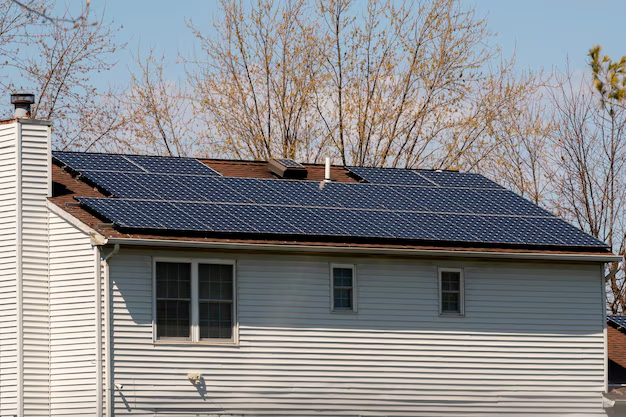
Installing solar panels for roofing in homes provides several transformative benefits that extend beyond just lowering bills. Let’s break them down:
Lower Electricity Bills
Electricity costs are at an all-time high. By generating your own power, you cut monthly expenses by up to 70%. For many households, this translates into savings of $1,000–$2,500 annually.
Increased Home Value
Studies show that homes equipped with solar panels for roofing sell faster and for higher prices. On average, solar homes can see an increase in property value of 4–6%, making solar not just an energy investment but also a real estate strategy.
Long-Term Sustainability
Choosing solar means reducing your carbon footprint by lowering greenhouse gas emissions. A standard residential system offsets 3–4 tons of CO₂ annually, which is equivalent to planting more than 100 trees per year.
Government Incentives & Tax Credits
In 2025, federal tax credits, local rebates, and renewable energy programs make solar more affordable. Homeowners can claim up to 30% tax credits on installation costs, significantly lowering upfront expenses.
In short, solar panels for roofing offer financial, environmental, and lifestyle benefits, making them one of the smartest upgrades for modern homes.
Solar Panels for Roofing vs. Traditional Roof Materials
When considering solar panels for roofing, many homeowners wonder how they compare to traditional roofing options like asphalt shingles, metal roofs, or even tile. The table below offers a comparison based on cost, lifespan, and efficiency:
| Roofing Type | Average Cost (per sq. ft) | Lifespan | Energy Efficiency | Added Value |
| Asphalt Shingles | $3 – $5 | 15–20 years | Low | Minimal |
| Metal Roof | $7 – $12 | 30–50 years | Medium | Moderate |
| Solar Roof Shingles | $20 – $30 | 25–40 years | High | Significant |
| Traditional Solar Panels on Roof | $2.50 – $4 per watt | 25–30 years | Very High | High |
Clearly, while asphalt remains cheap, it doesn’t generate energy. Solar panels for roofing not only serve as protective coverings but also pay for themselves over time through energy production, making them a superior choice for future-focused homeowners.
Cost of Solar Panels for Roofing in 2025
In 2025, the cost of installing solar panels for roofing varies depending on size, technology, and financing. On average, residential solar systems cost between $12,000–$25,000 after tax credits.
- Per Watt Pricing: Around $2.50–$3.50 per watt (before incentives).
- System Size: A typical 6kW system costs $15,000–$18,000.
- ROI Timeline: Most homeowners break even in 6–10 years, with systems lasting 25–30 years.
Financing Options:
- Solar Loans: Pay monthly while still saving on electricity.
- Leases & Power Purchase Agreements (PPAs): Lower upfront costs, but long-term ownership benefits are reduced.
- Cash Purchases: Highest savings over time.
When factoring in tax credits, rebates, and bill reductions, solar panels for roofing in homes offer one of the fastest returns on investment compared to other home improvements.
Factors That Affect the Cost of Solar Panels for Roofing
While average prices for solar panels for roofing in homes hover around $12,000–$25,000 in 2025, several factors can influence the final bill. Understanding these elements helps homeowners budget wisely and explore low-cost solar panels for roofing options that balance affordability with performance.
- Roof Size & Design – Larger roofs allow for more panels, which increases upfront costs but also boosts long-term savings. Complex roof designs with multiple angles or obstructions (chimneys, skylights) require custom racking systems, adding to labor expenses.
- Sunlight Exposure & Location – Homes in sunny states like Arizona or California can achieve faster payback periods compared to cloudy regions. Local climate impacts both energy production and panel efficiency.
- Energy Needs – Households that consume high amounts of electricity (e.g., EV charging, heated pools) will require larger systems, increasing upfront costs but maximizing ROI over time.
- Roof Age & Condition – Installing solar on an older roof may require repairs or replacements before mounting panels, adding to the project cost.
- Technology Choice – Monocrystalline panels cost more but deliver higher efficiency, while polycrystalline or thin-film panels are cheaper but less powerful.
By carefully considering these factors and exploring low-cost solar panels for roofing, homeowners can strike the perfect balance between affordability and long-term energy savings.
How Long Do Solar Panels for Roofing Last?
One of the biggest questions homeowners ask is: “How long do solar panels for roofing last?” In 2025, the answer is reassuring. Most high-quality solar panels have a lifespan of 25–40 years, with many continuing to generate energy beyond that, albeit at slightly reduced efficiency.
- Performance Warranties: Top brands guarantee at least 80–85% performance after 25 years, meaning panels will still produce a majority of their initial output decades later.
- Durability: Panels are built to withstand extreme weather—rain, snow, hail, and winds up to 140 mph. In fact, solar installations often outlast the roofs they’re mounted on.
- Maintenance: Minimal upkeep is required. Occasional cleaning (to remove dust, leaves, or snow) and inverter checks are enough to keep systems running smoothly.
For homeowners, this longevity means solar panels for roofing aren’t just a short-term energy solution—they’re a multi-decade investment in cost savings and sustainability. Pairing solar with battery storage systems further enhances value, ensuring reliable power even during outages.
In summary, a one-time installation provides decades of clean, renewable energy, making solar one of the longest-lasting and most dependable upgrades available for residential properties.
Best Types of Solar Panels for Roofing
Choosing the right system is critical for maximizing efficiency and savings. In 2025, homeowners have several types of solar panels for roofing to consider:
Monocrystalline Solar Panels
- Made from single-crystal silicon.
- Efficiency: 20–24% (highest on the market).
- Cost: Higher, but best ROI in the long run.
- Ideal for small roofs where space is limited.
Polycrystalline Solar Panels
- Made from multiple silicon fragments.
- Efficiency: 15–18%.
- Cost: More affordable than monocrystalline.
- Best for larger roofs with more surface area.
Thin-Film Solar Panels
- Lightweight, flexible, and easy to install.
- Efficiency: 10–13% (lower than crystalline).
- Cost: Low, but requires more space to generate the same power.
- Best for unconventional roofs or temporary structures.
Solar Roof Shingles
- Integrated into the roof itself for a sleek, modern look.
- Efficiency: 14–20%, depending on brand.
- Cost: Higher due to dual role as roofing + solar generator.
- Best for new homes or roof replacements.
By weighing cost, efficiency, and design, homeowners can select the best solar panels for roofing to match their property and energy goals.
Solar Panels for Roofing Installation Process
Installing solar panels for roofing in homes is more straightforward in 2025 thanks to streamlined permitting and advanced installation technologies. Here’s how the process works:
- Site Assessment & Roof Inspection – A solar installer evaluates your roof’s condition, orientation, shading, and structural integrity.
- System Design & Permits – Engineers design a customized system based on household energy needs. Local permits and approvals are obtained.
- Mounting & Racking – Mounting brackets are secured to the roof, ensuring stability and weather resistance.
- Panel Installation & Wiring – Panels are connected, wired, and linked to an inverter.
- Grid Connection & Inspection – The system is connected to the utility grid (if applicable). Final inspections ensure safety and compliance.
- Activation & Monitoring – The system is turned on, and homeowners can monitor performance via apps or dashboards.
How Long Does Installation Take?
- Physical installation: 1–3 days.
- Permits & approvals: 2–6 weeks (varies by location).
By 2025, new digital permitting systems will cut delays, making solar adoption faster and more convenient than ever before.
Top Companies Offering Solar Panels for Roofing in 2025
The demand for solar has fueled innovation from global leaders and local installers alike. Some of the best companies in 2025 include:
- Tesla Solar Roof – Known for stylish solar shingles that double as roofing material, ideal for modern aesthetics.
- SunPower – Industry leader in efficiency and warranties, offering premium monocrystalline panels.
- LG Solar – Durable, high-performance panels with strong brand reliability.
- Local Installers – Offer competitive pricing, personalized service, and knowledge of state-specific incentives.
Homeowners should compare quotes from at least 3–4 providers to ensure the best mix of cost, quality, and service.
Challenges of Installing Solar Panels for Roofing
Despite the advantages, there are some challenges to consider:
- High Upfront Cost – Even with tax credits, installation can feel expensive for some households.
- Roof Suitability – Old, shaded, or damaged roofs may not be ideal without upgrades.
- Weather & Shading Issues – Trees, nearby buildings, or frequent storms may reduce efficiency.
- Long-Term Commitment – While solar adds value, it requires a 20–30 year perspective for maximum returns.
Still, the long-term benefits typically outweigh these challenges, especially with low cost solar panels for roofing and flexible financing options now available.
Solar Panels for Roofing vs. Community Solar Programs
Some homeowners hesitate to install solar directly on their property and instead explore community solar programs. Here’s how the two compare:
| Option | Ownership | Cost | Savings | Flexibility | Best For |
| Solar Panels for Roofing | Homeowner-owned | Higher upfront, long-term savings | Highest over 25 years | Limited to property | Owners with roof space |
| Community Solar | Shared subscription | Low to medium | Moderate savings | Portable | Renters & shaded homes |
While solar panels for roofing provide greater independence and ROI, community solar offers accessibility for those unable to install panels themselves.
Future of Solar Panels for Roofing
The future of solar panels for roofing looks brighter than ever. Here are key 2025 trends:
- Bifacial Panels: Capture sunlight from both sides, boosting efficiency.
- Perovskite Solar Cells: Promising cheaper, higher-efficiency alternatives.
- AI Monitoring Systems: Predict performance issues and optimize energy output.
- Smart Home Integration: Pairing with EV chargers, battery storage, and IoT devices.
- Energy Independence: More homeowners combining solar with storage to go fully off-grid.
These innovations will shape the next decade, making the impact of solar panels for roofing on homeowners even more significant—driving savings, sustainability, and resilience against rising energy costs.
Conclusion
As 2025 unfolds, it’s clear that solar panels for roofing are no longer just an option—they are a necessity for homeowners seeking cost savings, sustainability, and energy independence. With average lifespans of 25–40 years, reduced upfront costs through tax incentives, and integration with smart home technologies, solar roofing is one of the best long-term investments you can make.
Whether you’re motivated by cutting electricity bills, increasing your property value, or contributing to a cleaner planet, the impact of solar panels for roofing in homes is undeniable. The future is solar-powered, and now is the time to take advantage of the incentives and technologies available in 2025.
Ready to start your solar journey? Consult a trusted local installer today and turn your roof into a clean energy powerhouse.
FAQs About Solar Panels for Roofing
Do solar panels damage roofs?
No, when installed professionally, panels can protect roof sections and extend lifespan.
Can solar panels be installed on old roofs?
It’s possible, but many installers recommend roof replacement if the roof has less than 10 years of life left.
Are solar panels worth it for small homes?
Yes, even smaller systems can significantly reduce energy bills and pay for themselves over time.
How much energy can solar panels for roofing save annually?
Depending on system size and location, households can save $1,000–$3,000 annually on electricity.
What is the impact of solar panels for roofing on homeowners?
They lower utility bills, improve property value, reduce carbon footprints, and provide long-term financial security.
